I Watch You Watching I Want Your Sex: Gregg Araki’s Generational Empathy
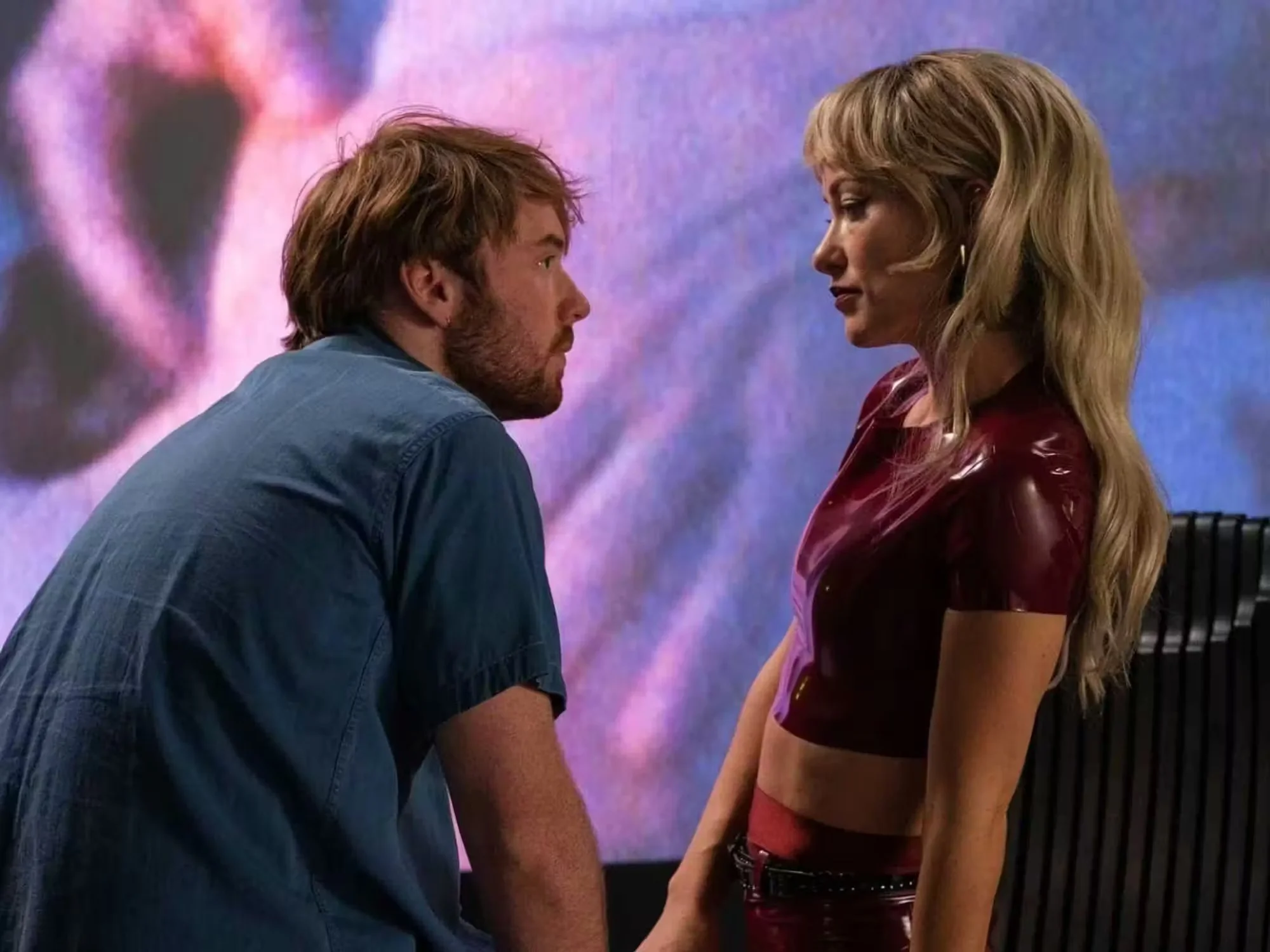
I Want Your Sex, director Gregg Araki’s first feature in twelve years, could have fallen into the endless, useless generational war dialogue. But Araki, one of the icons of the New Queer Cinema movement of the 1990s – whose Teenage Apocalypse trilogy undeniably embodies the Gen X ennui and angst with a mixture of cheekiness and compassion – is not unfamiliar with extending understanding to those younger than him. After all, Araki is (surprisingly, when looking at The Doom Generation and Nowhere) a Baby Boomer. One of the greatest skills an artist can have is observation. Observation of those around them, of their idiosyncrasies, their flaws, their triumphs, their adherence to social codes or embracing of taboos. Araki is clearly someone who observes.
A common online discourse of the last half decade is that the sex scene is in danger of disappearing from American cinema. In some ways, I understand this fear. It is true that with the rise of algorithm speak (words like ‘grape’ instead of rape, ‘unalive’ instead of die, and ‘seggs’ instead of sex), a type of self-censorship to avoid shadowbans on platforms like YouTube and TikTok, is reaching a Hays Code-esque pitch. It is also true that mid-budget R rated films, films specifically aimed at adult audiences and discussing adult topics, have nearly disappeared, as homogenized and resurrected IP ala Marvel and Star Wars has taken hold. Gone are the days of Basic Instinct and Crimes of Passion, for better or for worse.
But sex’s supposed disappearance from the screen isn’t entirely accurate, and also doesn’t speak to the erotic potential of withholding, of making your audience crave, perhaps even beg, for more. I Want Your Sex stars Cooper Hoffman, firmly Gen Z, and Olivia Wilde, an elder millennial, as, respectively, a bright eyed new hire, Elliot, and a provocative abstract artist, Erika Tracy. Thrust, quite literally, into the art world, and soon after into a whirlwind sexual relationship with the artist, the substantially younger Elliot spirals into obsession with his lover/boss – leading the police to immediately suspect him when she goes missing under mysterious circumstances. As you can imagine, there is a lot to unpack here, including generational gaps, their respective relationships to sex, and power dynamics between men and women. But more substantially, the dynamic between employer and employee, particularly in a post MeToo world, a movement that would have happened during Elliot’s early teenage years, years formative to sexual development. The film’s framing device additionally posits questions on bleak spectre of true crime and its exploitation and simultaneous veneration of trauma, sexual or otherwise.
Araki is able to avoid being overtly preachy about the youths and their potentiality for puritanism by keeping his commentary sympathetic and skeptical, similar to that of his Teenage Apocalypse trilogy. He also doesn’t only hone in on young people; Wilde’s character, who is a millennial, romanticizes a time before hers where sex was plentiful and freeing, a mythical sexual revolution at Studio 54 doused in cocaine, pleather, and excellent vibes. She’s a great foil to Elliot precisely because she is not spared from Araki’s pointedly withering critique. No one is safe from potential ridicule by I Want Your Sex, but it is never nihilistic. Instead quite the opposite, entirely humanizing in the way people are infuriatingly, wonderfully, orgiastically, people.
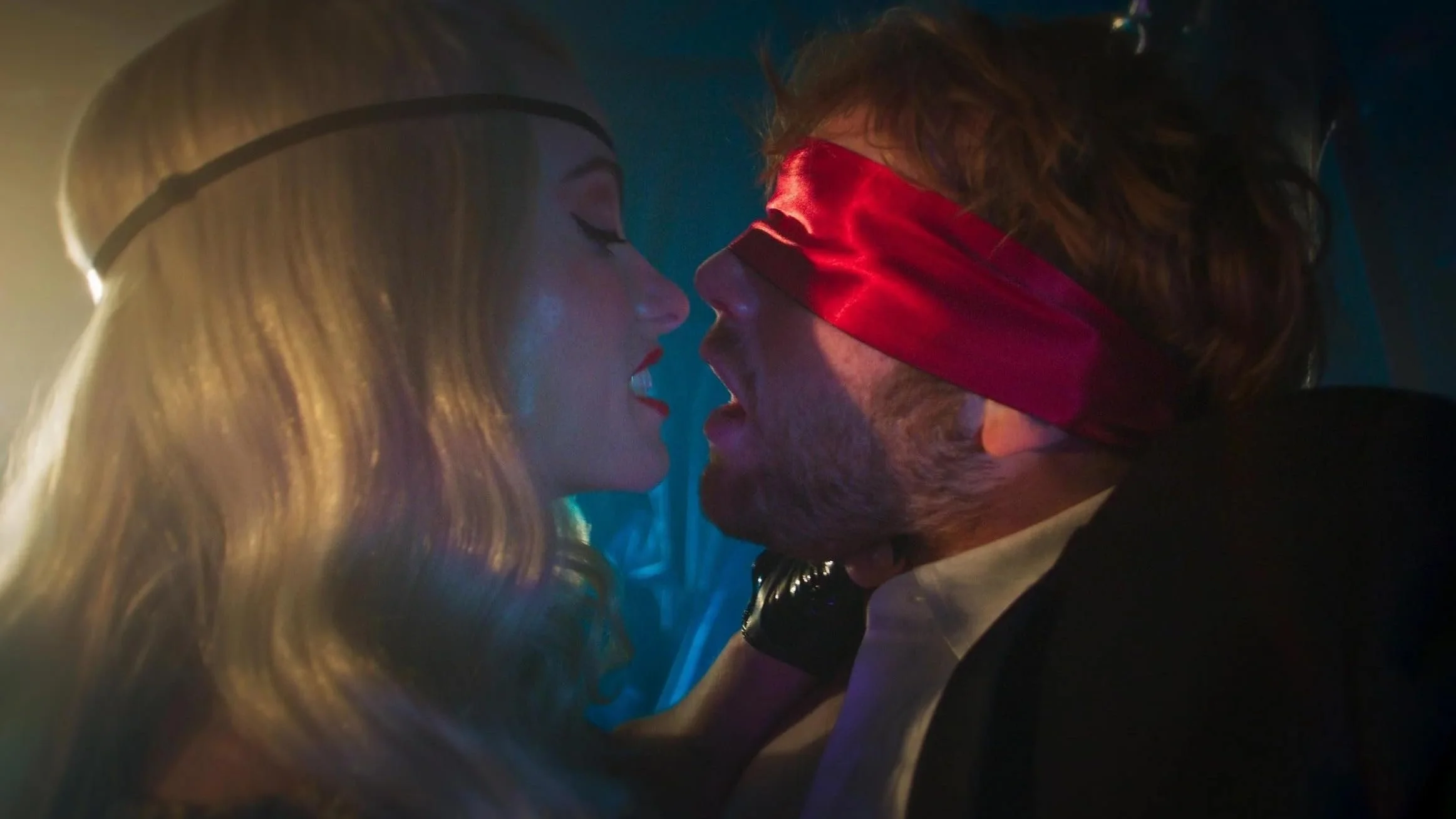
This was my fourth from Araki (I am now at a grand total of five, having seen Mysterious Skin recently) and when discussing with my friend after seeing it, one thing we both noted, that we were both surprised by, was the lack of on screen sex. There is no dedicated sex scene. There is a sex montage, there is sex as art pieces, there are multiple scenes of sex unfulfilled, but there is no sex scene. With a title like that it seems fair to ponder or even opine on why there is no sex scene. I did find myself surprised, but also reminded of watching The Doom Generation (generation preoccupation at the forefront more than two decades before, with the 1997 film title being parodic of the generational wars) for the first time, where the promise of sex, specifically a threeway, is an allure we never get to quite touch. Like a great horror film keeps the monster in shadows, knowing that whatever I think up is entirely more scary than anything that could be shown on screen, The Doom Generation knows that whatever bisexual bacchanalia I imagine will be entirely more erotic than the tangibility (and lack of mystery) of witnessing it on screen.
To be clear, this is not me arguing against the sex scene. Oftentimes online anti-sex scene discourse questions the purpose of sex scenes, claiming they are irrelevant to the actual plot. If the sex scene is not strictly necessary in the most utilitarian sense, then, the argument goes, it is pointless. This argument is obviously ridiculous, and reveals a lack of understanding about storytelling, filmmaking, and eroticism, but also gets engagement online, mostly out of rage or ridicule. I’m frankly unconvinced that this perspective is even all that common, or that it’s on the rise among younger generations. Even so, the lack of a dedicated sex scene in this film speaks to the question of ‘utility’ that the anti sex scene argument posits. In The Doom Generation, the omission of a threesome is a tantalizing forbidden fruit. In I Want Your Sex, where the dynamic is much more fraught in terms of coercion and the power of an employee to even be able to consent to sex with an employer, the potential for something tantalizing is not held just out of reach, but instead revoked.
Any discussion of the sex in I Want Your Sex is remiss without touching on the power dynamics between employer and employee in a sexual relationship. Araki is certainly not the only artist intrigued by this power imbalance in post MeToo era art. But compared to other works, he handles the subject material with much more thoughtfulness than is typically expected in these stories when put to film. It is particularly fascinating when looking at what sex acts specifically happen between the two, especially the BDSM elements, where Erika is the dominant and Elliot is thrilled to take up the mantle of submissive. I previously critiqued the Olivia Wilde-directed misfire Don’t Worry Darling for how it coded cunnilingus as inherently empowering, and I think the sex between Erika and Elliot provides an interesting wrinkle to my previous criticism. Even if it is not inherently empowering for a woman to be eaten out, or disempowering for a man to be whipped and pegged, there are still societal expectations and assumptions around sex roles along gender lines; the woman submits and gives up power in being penetrated, and so on.
This film plays with these assumptions even as it does show the submissive having less power. That the boss, who is a woman, is the dominant and the penetrator speaks more to her as a character than any sort of judgement on the film’s behalf about what is empowering or not. Erika reveals her own hangups and biases around sex, not only through whisking Elliot away into an entirely imbalanced relationship where any concern he might have is handwaved away by Erika as evidence that his generation is sexually constipated, but in how she uses domination to hold onto her power over Elliot. Domination becomes a stand-in for being his boss, his elder, the person who holds his professional life in the palm of her hand, all the while using him in a piece of sexually charged art. This shows that as provocative as Erika styles herself, there is ultimately something deeply banal and reactionary at her artistic (and possibly interpersonal) core.
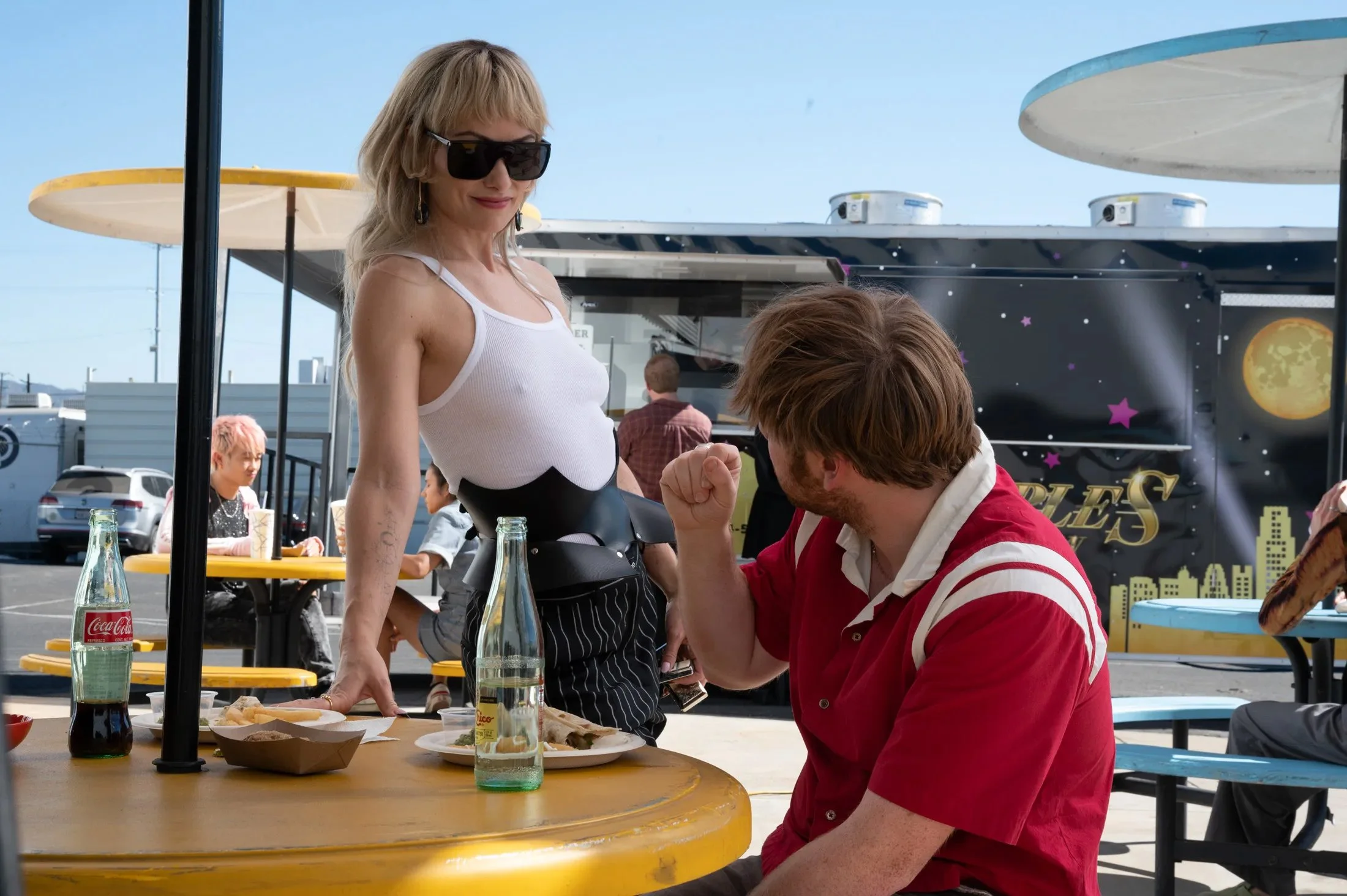
While Elliot recounts the story of his ill fated affair with Erika, the framing device of him telling the story to two unconvinced cops (Margaret Cho, who is also in Doom Generation, and Johnny Knoxville, who now as far as I know is in at least two films by great gay auteurs) evokes the true crime genre. But it isn’t until the film’s end, when, during the first (of two) time skips forward of five years, Elliot interviews Erika on his popular podcast. The two speak cordially like old coworkers or collaborators, or more surprisingly, as equals. In a way their relationship was a working collaboration, used in Erika’s art and for Elliot to launch his career as an interviewer and podcaster, something Erika suggests, both earnestly and cynically, that he should do in the aftermath of her missing person case. Erika had already turned their sex into content, artwork for her exhibition and Elliot eventually takes her advice and turns his experience into content as well. The film’s title takes on a succubus-like meaning, “I Want Your Sex” not as a declaration of desire or longing, but as a request for a material to be consumed or utilized for my own purposes.
That Elliot specifically parlays his brief brush with criminal infamy into a successful podcast career widens the film’s critical focus from power dynamics in sex and art into the black hole that is the current true crime landscape and its commodification of trauma. At least Elliot is turning his own pain into currency, unlike many of the top podcasters working in the true crime space. I wish this sequence had been longer, with more time for us to sit with Elliot’s career trajectory five years out from Erika’s disappearance, as his podcast was more in the lifestyle/strictly calibrated celebrity interview genre than in true crime. Either way, there is that commodification of trauma, either the sharing of other people’s tragedies or the selling of one’s own past suffering supposedly in order to reach self-empowerment and encourage listeners to do the same.
The second ‘five years later’ is much briefer, and does signal the actual end of the film, leaving it particularly notable and particularly mysterious (perhaps, in its mystery, it is also erotic). In split screen, Elliot and Erika wake up from a shared nightmare of their wedding punctuated by Cronenbergian body horror. A decade after their tryst, there is still this inextricable link between the two, a link that is not clearly good, but is also not clearly bad. This is not the first story I’ve noticed where the ending suggests a painful, possibly erotic, and undeniable tie between an abuser and the abused. In the final pages of Rachel Lyon’s 2024 novel Fruit of the Dead, a retelling of the myth of Persephone for the post-Epstein world, 18-year-old Cory is sure she will meet her abuser, the middle aged billionaire Rolo, once again. The 2026 novel The Adjunct by Maria Adelman similarly ends with the titular adjunct reuniting with her PhD adviser who sexually harassed her. What to make of these troubling and ambiguous finales? Initially, I found these endings discomfiting, and even after considering them at length, I continue to find their ultimate meanings elusive. Perhaps that is the point, that when these abuses of power happen, a victim disentangling feelings in the aftermath is complicated, messy, and can feel ultimately inconclusive.
I Want Your Sex is provocative, but not in the way Erika’s art is. It’s provocative not only in its approach to sexuality but also its deeper questions about desire, power imbalances, and how we process injustice. It avoids what Erika falls into with her condescension of younger people, and instead has a far more interesting and empathetic lens on the shifts in sex and sexuality for Generation Z. Araki remains as sharp and honest a commentator on modern life as he was with his masterful work in the 1990s, and his return to the big screen after over a decade is a welcome one.