The History of Sound: This One Goes Out to the Heartbroken
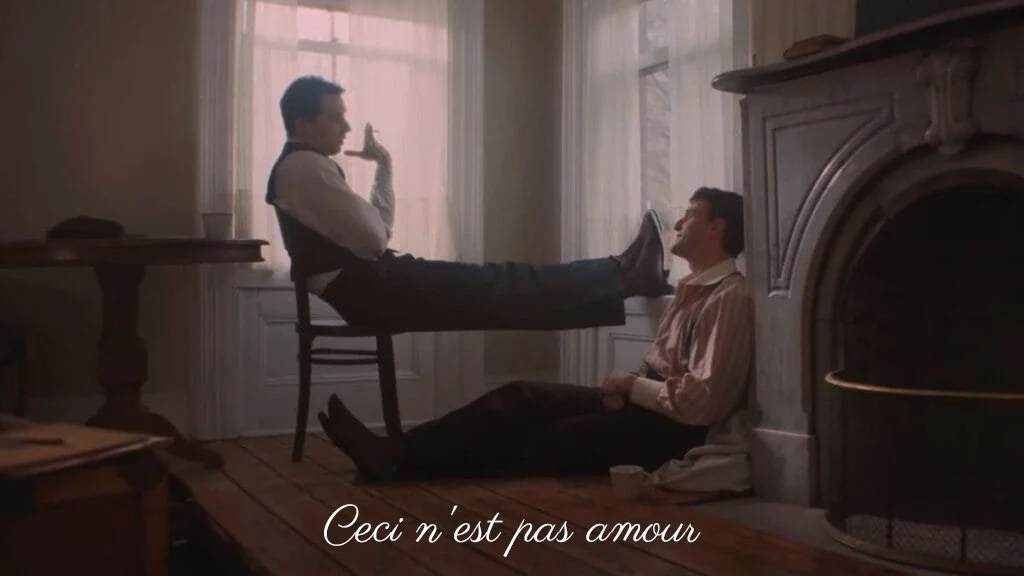
Love cannot be captured. It does not exist in a touch, in a look, or in something that’s been said. It certainly doesn’t exist on screen. Real love is all of these things and none of these things at once. But that hasn’t stopped humanity from striving to capture it through various artistic mediums for centuries. Art can’t replicate a full experience shared between two people, but it can open a doorway through time – a direct path to a time and place, or to a feeling that we thought long dormant. Oliver Hermanus’ The History of Sound (2025) draws a clear parallel between the experience of love and the power of music. Showing how even after the partnership has severed, the love does not disappear – like a song, it repeats and swells and reverberates inside of you, long after the record has stopped.
Taking place in 1917, Lionel Worthing (Paul Mescal) and David White (Josh O'Connor) are two music students who meet and bond over a shared love of folk songs. Born and raised on a farm in the south, Lionel is drawn to David’s metropolitan charm and his preternatural ability to recall every song he’s ever heard. The attraction is immediate and mutual, but their romance is cut short when David gets drafted and sent to war. A year passes when Lionel suddenly receives a letter from David, explaining that he’s been commissioned by Bowdoin University to record folk songs across the country and invites him to assist. Lionel immediately leaves his parents’ farm to join him.
While in Maine, their romance quickly reignites as they travel across the countryside, meeting various people from all walks of life and recording their singing on wax cylinders. Once the trip winds down, David and Lionel go back to their respective jobs – David to his university teaching gig, and Lionel to Europe to further his music studies. Lionel asks David to write, but to his great disappointment, he never hears from him again. As the years pass, Lionel can’t get their powerful experiences out of his head, eventually leading him back to Maine to investigate why David never replied.
Shot in earth tones, spoken in hushed voices, and framed around enigmatic expressions, The History of Sound paints a portrait of forbidden love as filtered through the lens of repressed masculinity. Don’t confuse deliberateness for dullness; the film builds like a crescendo, slowly at first as David and Lionel’s love story develops, and then overpowering us with heartbreak in its final scenes. In a nod to the passions of its characters, director Hermanus smartly chooses to uncover his subjects through listening even more than telling. Deepening its main characters primarily through their empathy for one another – their ability to truly witness one another without speaking.
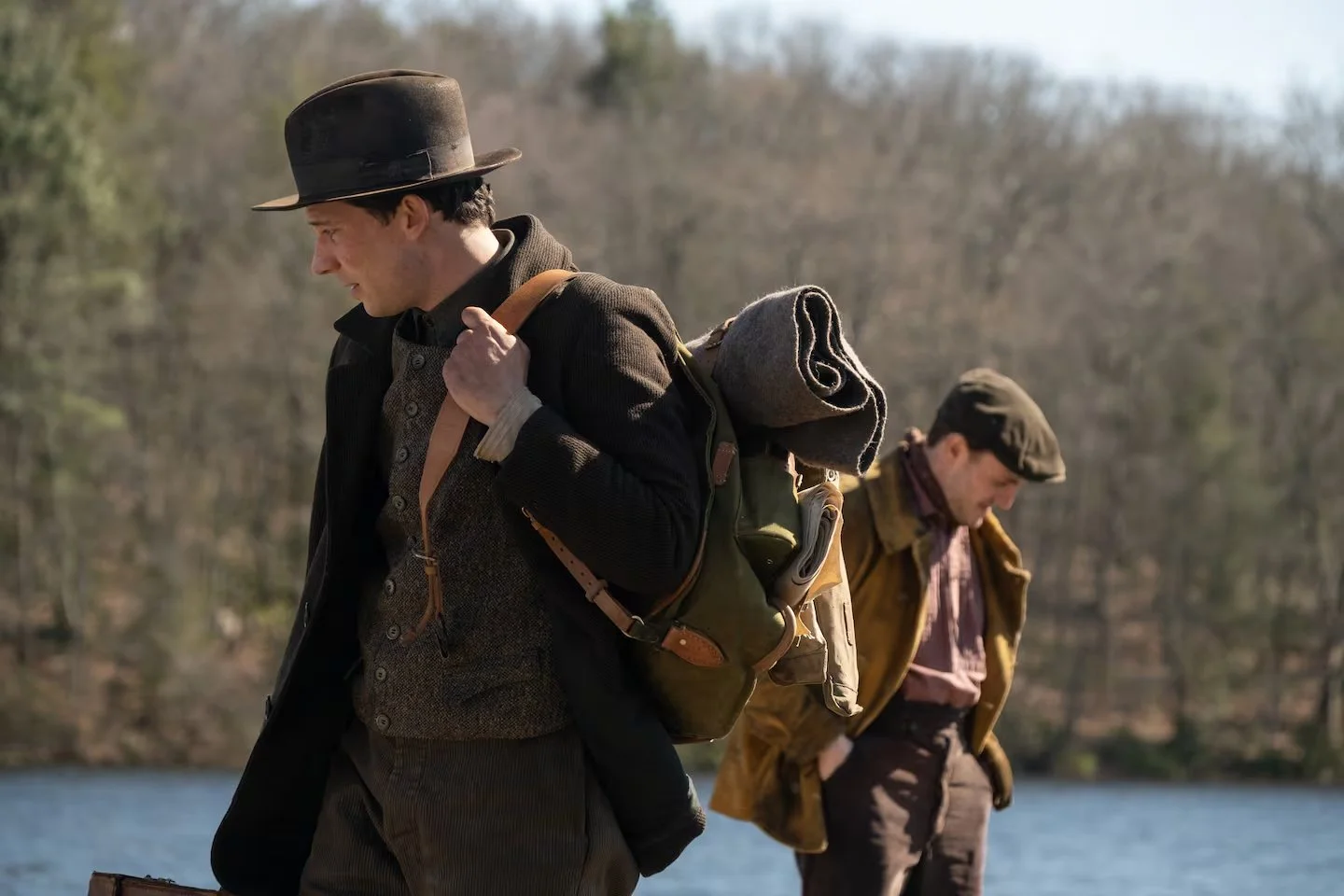
When we meet David he is already deeply guarded and aloof, even before he gets shipped out to witness the horrors of war. Orphaned at a young age and subsequently adopted by his uncle, David’s childhood obsession with music became a pillar of stability in his life. His happiest memories were of traveling with his uncle across the English countryside, collecting folk songs and recording them in a book. Where Lionel is more of a typical stoic, raised by an emotionally distant family that doesn’t understand his sensitivity or his passion for the arts, he’s slightly more able to express himself than David is to respond in kind. “Everybody you know is going to die, you know that,” he replies with a smile after Lionel expresses his condolences for David’s dead parents and uncle. It’s clear David struggles to believe that love could ever be permanent, let alone that it’s something he deserves.
But when it comes to music, David suddenly springs to life in full color. He becomes loquacious and charming, full of passion and excitement. “I just become who they want me to be” he tells Lionel when asked how best to avoid the awkwardness of asking strangers to let you into their homes. To David, the importance of recording folk songs goes beyond mere collection – by recording this music he’s capturing something bigger than the individual. He’s capturing their feelings, their memories, the soundtrack to their lives, the proof of life hidden and isolated in rural fields. He’s capturing a time and a place, like the beauty of the interracial society they found living on Malaga Island, just before it was raided and burned to the ground.
The film shows David and Lionel’s romance through this shared reverence of music. When the two of them are listening to, playing music, or singing to one another, time seems to stop. Shot through tight close ups and loving gazes, we’re brought softly into this private world of unspoken intensity. These sequences are more powerfully representative of their passion for each other than the actual sex scenes. Music is the only outlet through which David allows himself to feel – living vicariously through the feelings and words of others. Ultimately, it’s David’s own fear of confronting himself that causes The History of Sound to become a tale of heartbreak. Unable to communicate the strength of their true feelings, coupled with the oppressive homophobia of the time period that wouldn’t have allowed them to live in the open even if they could overcome the rest, the power of true love is no match for untreated trauma and the weight of the unspoken. David chooses to abandon Lionel instead of addressing his inner wounds.
“What happens to it all — all of the sounds of the world released but not captured?” David asks toward the end of the film. Love cannot be captured, but like a song, love does not cease to exist once it ends. It lingers inside of us, like a melody repeating over and over in your head; sometimes happy, sometimes sad, sometimes maddening. Even when the partnership dissolves, by choice or involuntary circumstance, what was made together persists in defiance of time. You may eventually forget the words, or even try your hardest to lose the tune, but you’ll always remember the a radiant, endless joy you felt when you could listen to it everyday on repeat.